
Last updated October 16, 2026
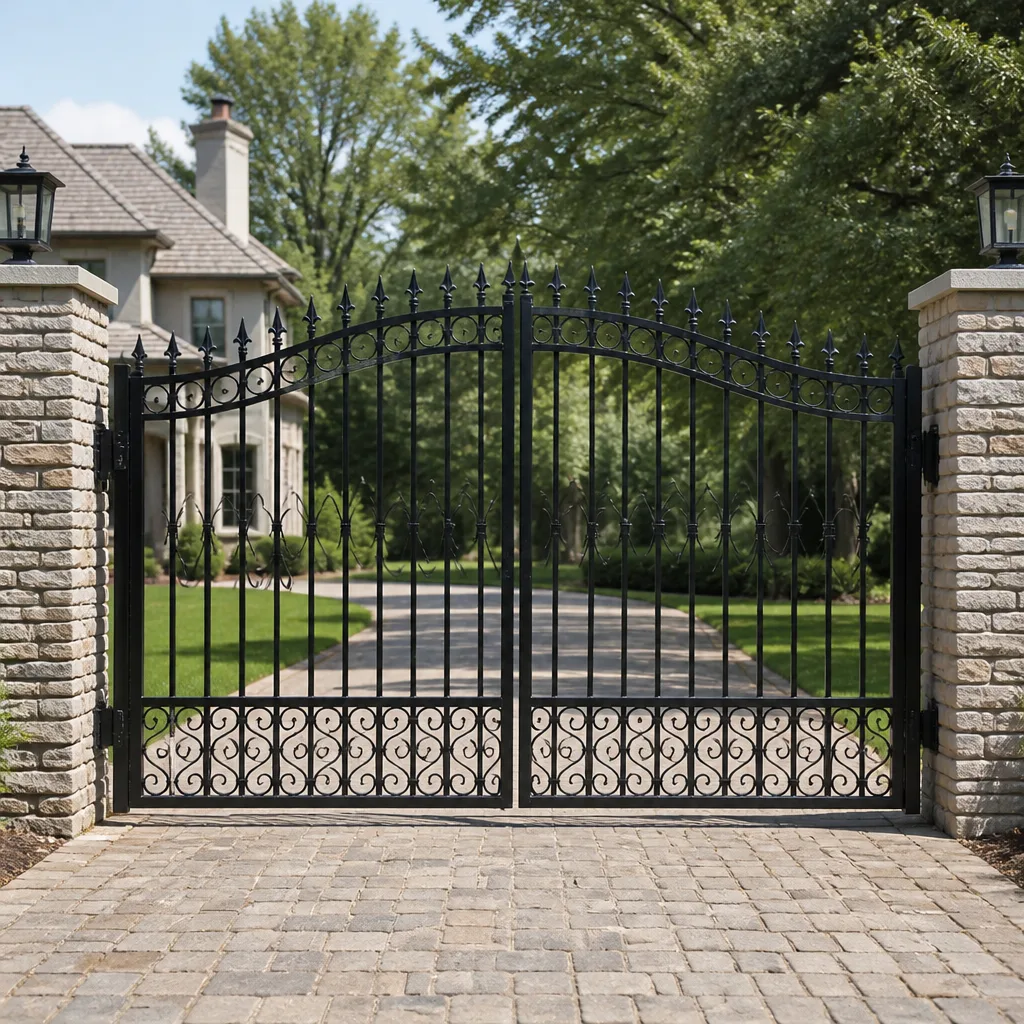 Wrought iron
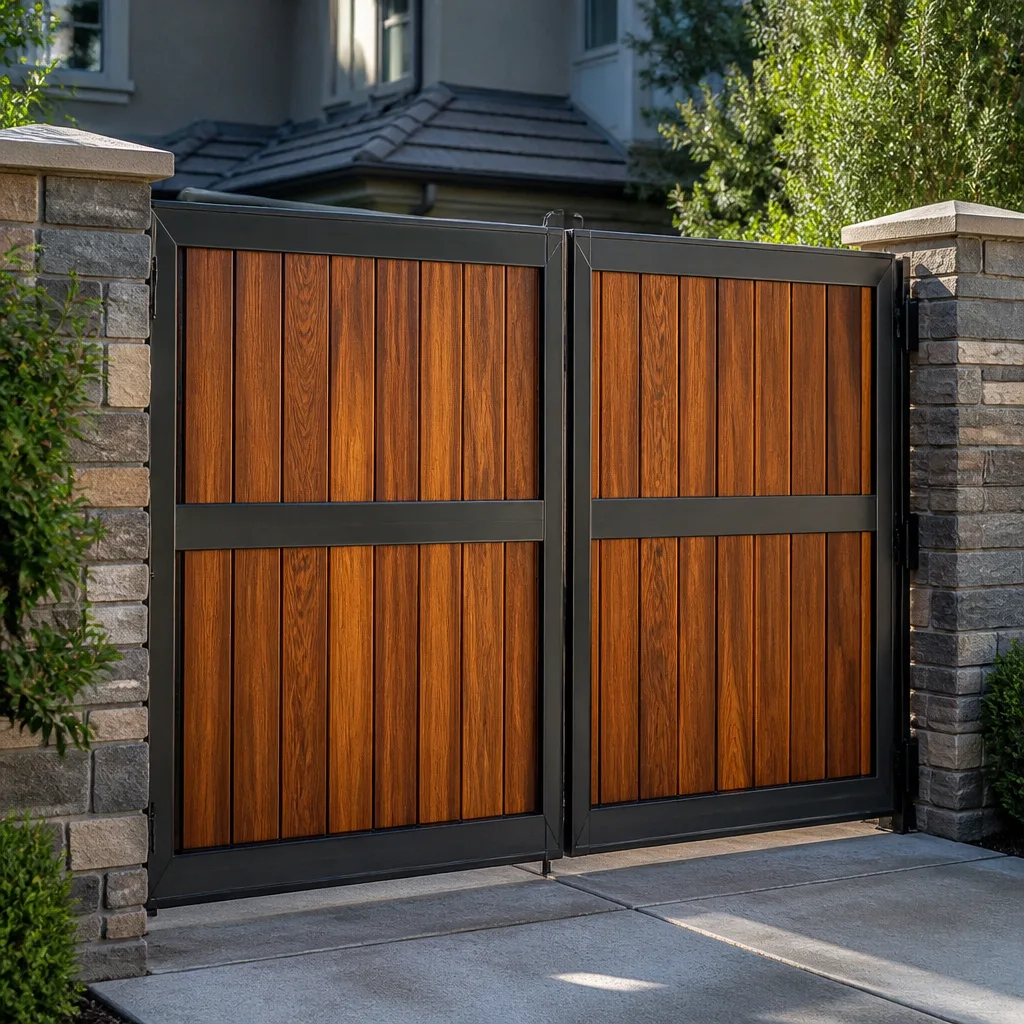 Wood & steel frame
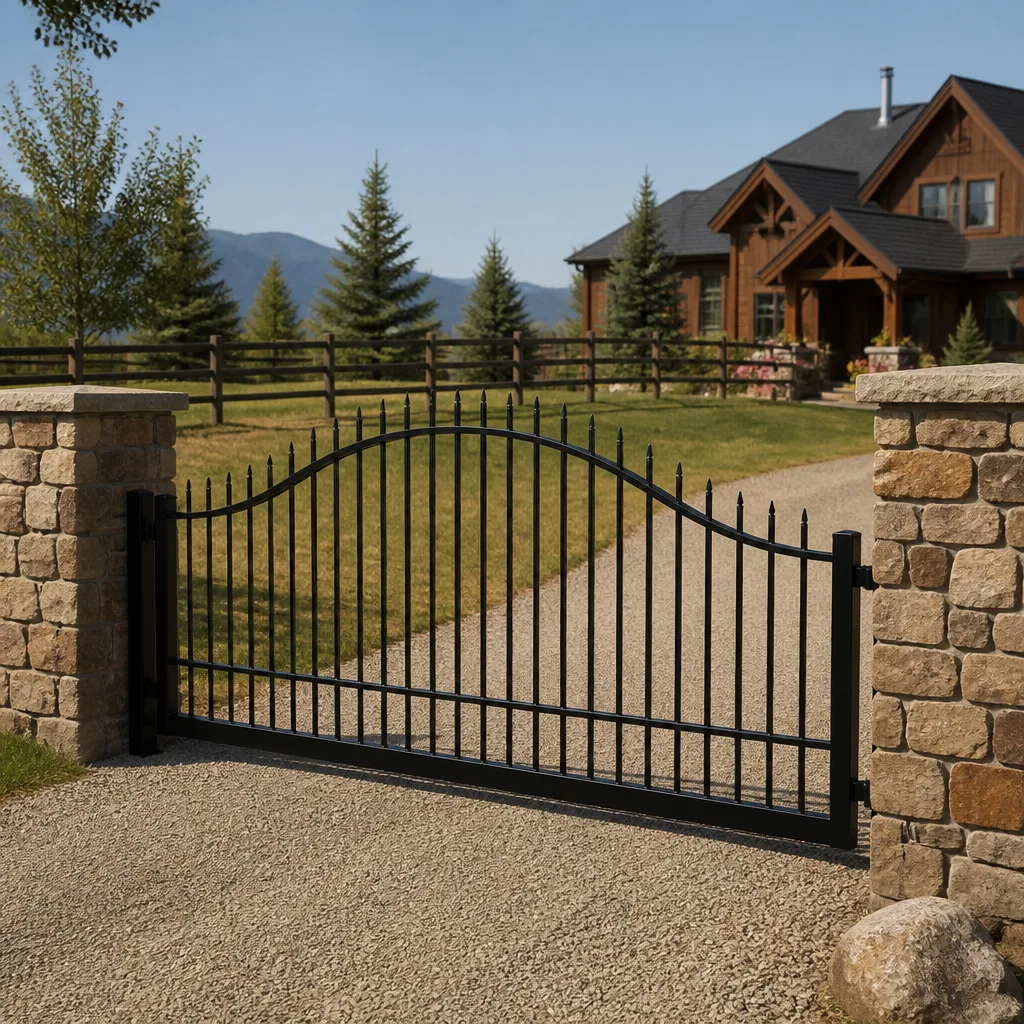 Farm & ranch
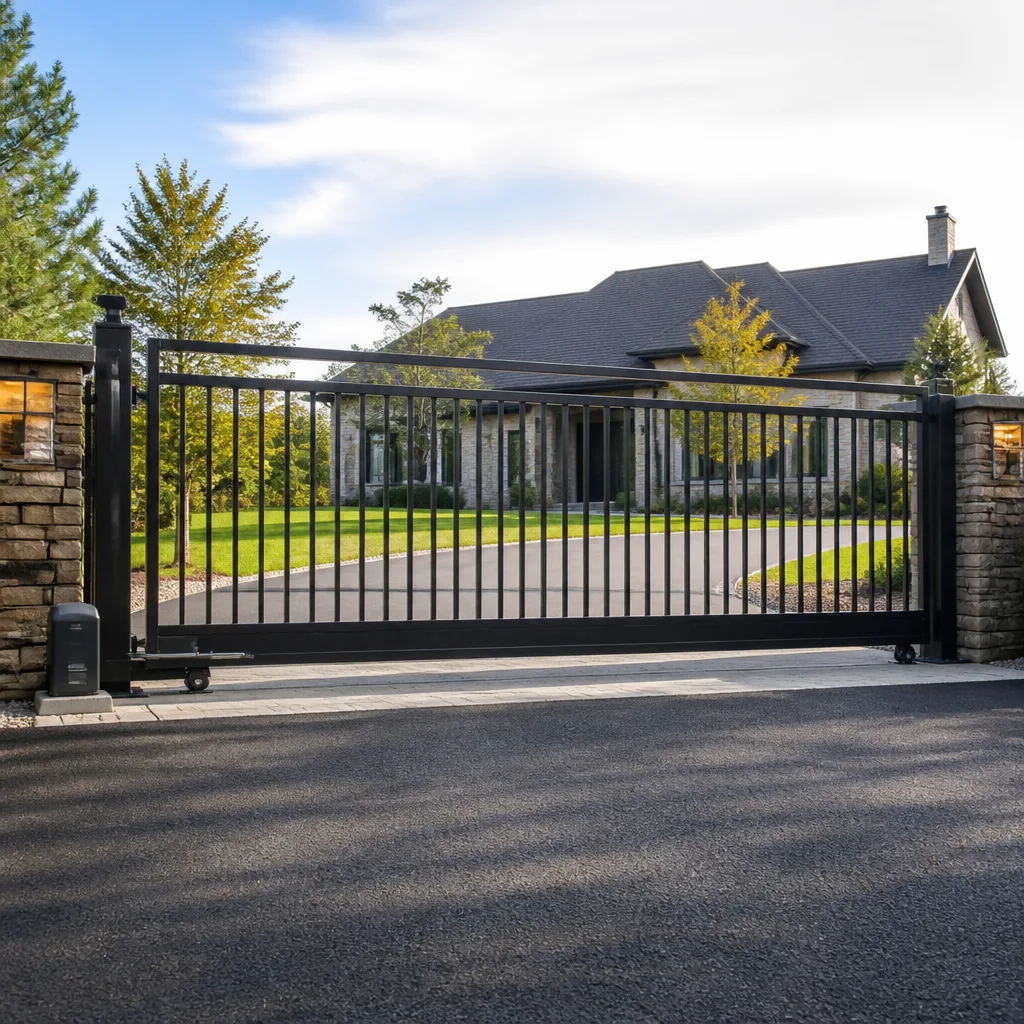 Sliding driveway gates
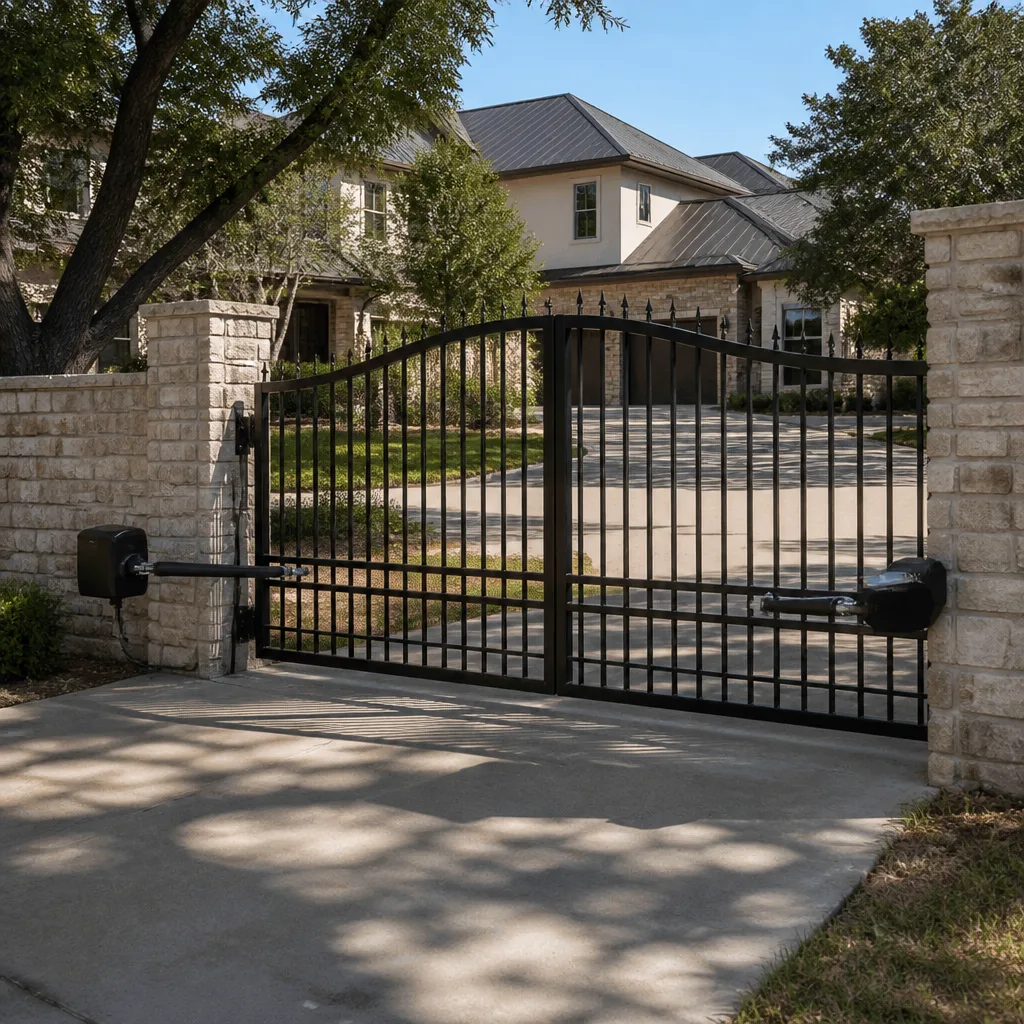 LiftMaster operators
Free on-site gate assessment - hinges, posts, and your LiftMaster or Nice gate operator checked before anything is quoted
The assessment is free and the quote is the invoice.
Get your free estimateGate Repair Warning Signs: A Fort Lauderdale Homeowner’s Reference Guide
A gate that hesitates for two seconds before moving is the single most misread warning sign in the Fort Lauderdale market. Homeowners assume it’s a sensor or remote issue; most of the time it’s a dying capacitor in the operator motor – a $90 part that, if ignored for 60 more days, takes the entire motor board with it at a $400 – $600 replacement cost. This guide walks you through the ten most common gate failure presentations we see on calls across Fort Lauderdale, from Rio Vista to Coral Ridge to Victoria Park, and tells you what each one actually means, what it costs to fix now, and what it costs if you wait.
Quick Answer
The most common gate repair warning signs in Fort Lauderdale are hesitation before movement, grinding or squealing during travel, reversing mid-cycle, visible sagging, and reduced remote range. Each of these symptoms points to a specific component failing – a capacitor, a gear set, a safety sensor, a hinge, or a receiver board – and most cost $90 – $350 to repair if addressed within the first month, versus $400 – $1,800 for a full operator or gate rebuild if deferred. Any warning sign involving unpredictable reversal, unresponsive safety edges, or a gate that free-rolls on power loss is a safety issue and should be addressed immediately.
Styles & brands we work with
Table of Contents
- Hesitation Before Movement: The Capacitor That’s About to Die
- Grinding and Squealing: What the Sound Actually Means
- Reversing Mid-Cycle: Safety Sensors vs. Force Settings
- Sagging Gates: The Hinge and Wheel Failure Timeline
- Remote Range Loss: The Fort Lauderdale Salt Factor
- Coastal-Specific Warning Signs: Salt Bloom, Chalking, and Seal Shrinkage
- The 10-Cycle Diagnostic: What You Can Test Yourself
- Cost Brackets: Early Repair vs. Deferred Failure
- Safety Risks vs. Inconveniences: Knowing the Difference
Hesitation Before Movement: The Capacitor That’s About to Die
When you press the remote and the gate waits two or three seconds before it moves, that pause is not a communication delay. The receiver picked up your signal fine. What’s happening is inside the operator – the motorized unit that drives the gate – where a component called the start capacitor is struggling to deliver the initial voltage surge that gets the gate moving. Think of the capacitor as the kick that gets a bicycle pedal past the top of its rotation. When that kick weakens, the gate hesitates.
In Fort Lauderdale, we replace capacitors on swing and slide gate operators year-round, but the call volume ticks up noticeably in summer. Heat stress shortens capacitor life, and an operator mounted in direct sun in neighborhoods like Poinsettia Heights or Sailboat Bend runs hot for months at a time. The part itself runs $60 – $90. Labor brings most capacitor swaps to $180 – $280, and the repair takes under an hour. What surprises homeowners is that the capacitor rarely fails alone when ignored. As it degrades, it draws excess current through the motor board. That’s the $400 – $600 repair that follows if you live with the hesitation for two or more months.
What to watch for:
- Hesitation that worsens over 2 – 4 weeks, from one second to three or more
- A dull hum before movement starts
- Intermittent “no response” episodes that resolve on second or third try
If the gate hesitates but still completes its full travel, you’re catching it early. Call a gate technician and describe the delay specifically – how many seconds, and whether it’s consistent. That one detail lets us diagnose a capacitor failure before we even arrive. For a precise diagnosis on your operator, see our Gate Repair in Fort Lauderdale page.
Grinding and Squealing: What the Sound Actually Means
Gate operators make a predictable sound when healthy: a low, steady whir. Grinding is never that. Grinding means metal is contacting metal in a way it wasn’t designed to, and it’s almost always coming from one of three places: the drive gear inside the operator, the chain or belt on a slide gate, or the hinge pins on a swing gate.
On swing gates – the most common style we service in Fort Lauderdale’s older neighborhoods like Croissant Park and Middle River Terrace – grinding usually traces to hinge pins that have lost lubrication and are now wearing into the hinge barrel. Left alone, the pin ovalizes the hole, the gate drops a quarter-inch, and the operator has to work against that added friction every single cycle. That’s how a simple $150 hinge service becomes a $700 – $1,400 re-hang with new hinges, patch welding, and gate realignment. On slide gates, grinding is often the drive gear on a rack-and-pinion setup, where the gear teeth have worn sharp and are now shaving the rack. The fix is a gear set replacement, typically $300 – $500, before the rack itself needs replacing at $800 – $1,200.
Squealing is different from grinding and slightly less urgent. A squeal that happens at the start of travel is usually a belt slipping on the operator pulley. It’s a $120 – $220 adjustment and belt replacement. But if that same squeal is left alone, the belt eventually snaps mid-cycle, which on a LiftMaster or FAAC operator can take out the limit switch arms attached to the same assembly. Now you’re at $500 – $700. If you hear metal-on-metal grinding from a gate on a LiftMaster, FAAC, or BFT operator, get it looked at within two weeks. This is not a sound that self-corrects.
Reversing Mid-Cycle: Safety Sensors vs. Force Settings
A gate that starts closing and then reverses back open is doing one of two things: responding to a safety sensor input or responding to a force threshold setting. Telling them apart matters because one is urgent and the other is just annoying.
Every Automatic gate installed in Fort Lauderdale within a residential setting is required to have a detectable obstruction system – typically photo-eye sensors near the gate’s travel path and, on many systems, a pressure-sensitive safety edge on the leading edge of the gate itself. If the photo-eye lenses are dirty, misaligned, or obscured by landscape growth – and in Fort Lauderdale, fast-growing vegetation like hibiscus and bougainvillea is a constant factor – the system reads an obstruction and reverses. That’s the annoying cause. Cleaning and realigning the photo-eyes runs $120 – $180 on most service calls.
The urgent cause is when the force setting drifts. The operator’s control board has a potentiometer or digital setting that governs how much resistance the motor will push against before reversing. When that setting drifts too low – often after a power surge or a control board reset – the gate reverses on its own weight. When it drifts too high, the gate will keep pushing against an actual obstruction, which is how pets and children get hurt. Both directions of drift are problems. An operator that reverses unpredictably should be treated as a safety issue until a technician confirms otherwise. See our Electric Gate Repair in Fort Lauderdale page for how we handle force-setting recalibration.
Sagging Gates: The Hinge and Wheel Failure Timeline
Sagging is the gate symptom you can see from the sidewalk. A swing gate that used to clear the ground by two or three inches now drags on the concrete. The latch no longer lines up with the catch. You have to lift the gate slightly to get the lock to engage. That’s a sagging gate, and in Fort Lauderdale it has a predictable timeline.
The cause on most residential swing gates is the upper hinge. Fort Lauderdale’s frequent summer storms saturate the soil, which makes gate posts shift, and that shift transfers all the gate’s weight to the hinge that was not designed to carry it. The upper hinge begins to yield – pins bend, weld points crack, and the gate progressively drops. From the first quarter-inch of sag to a gate that drags the ground is usually 4 – 8 months. During that window, the repair is a hinge replacement and gate re-hang: $350 – $700 depending on gate weight and material. After the gate drags hard enough to bind mid-travel, the operator strains against the obstruction, and the failure cascades: operator gear wear, motor board stress, and eventually a burnt motor. That repair path commonly reaches $1,600 – $2,600.
Slide gates sag differently. Listen for a rhythmic bump as the gate travels. That’s a V-wheel or roller assembly losing its grip on the track, usually because the bearing inside the wheel has corroded. In Fort Lauderdale’s salt air, unsealed roller bearings die within 3 – 5 years of installation. A single wheel replacement runs $120 – $180. All four wheels plus track and rail adjustment runs $600 – $900. Whether you have a swing gate or a slide gate, the sagging rule is the same: the repair cost now is a fraction of the repair cost when it fails completely.
Remote Range Loss: The Fort Lauderdale Salt Factor
If you’ve noticed you need to be closer to the gate than you used to be – 20 feet instead of 60 – there’s usually a fault in the receiver side of your system. And in Fort Lauderdale, the leading culprit is not the receiver itself. It’s corrosion on the antenna connection and on the circuit board terminals inside the operator housing.
Salt air is abrasive to exposed metal. The antenna on most gate operators is a short wire that exits the housing through a small grommet. Over two or three Fort Lauderdale wet seasons, the connection at the base of that wire oxidizes. The result is a receiver that still works but with dramatically reduced sensitivity. We see it regularly in waterfront neighborhoods like Harbor Beach, Las Olas Isles, and Nurmi Isles, where the salt concentration in the air is highest. The fix is simple: clean the terminal, reseal the connection, and in many cases extend the antenna with a properly sealed coaxial run. That’s a $140 – $240 service call.
Less commonly, range loss is the remote itself. Remote batteries fail at different rates, and a remote that’s been dropped or sat in a hot car in a Fort Lauderdale parking lot often has an internal solder joint that’s cracked. Before you call, test a second remote. If the range is bad on both, it’s the receiver side. If one remote is bad and another is fine, replace the battery or the remote. New remotes run $60 – $110 through a dealer, but the technician visiting for other work can often reprogram one in ten minutes.
Coastal-Specific Warning Signs: Salt Bloom, Chalking, and Seal Shrinkage
Generic gate repair guides online miss the warning signs that are specific to coastal cities; for seasonal gate repair care for Fort Lauderdale, check our year-round homeowner’s guide. Fort Lauderdale’s gate failures follow a different pattern than inland Florida, and knowing the three salt-air tells can save you from a surprise repair.
1. White salt bloom on weld joints. If your gate or fence has welded joints, look closely at the junction points. A chalky white crust forming at the weld is salt bloom – sodium chloride from sea spray bonding with the metal and accelerating oxidation. It’s not cosmetic. Salt bloom at weld joints means the joint is losing its protective coating and moisture is penetrating the metal. Left unchecked in the Fort Lauderdale environment, a salt-affected weld fails within two years – often at exactly the point where the gate attaches to the hinge-plate. The intervention is the cheap part: a wire brushing, a rust-conversion coating, and a re-paint. Done early, it’s a $200 – $400 cosmetic repair. Done late, it’s a re-weld and re-hang at $800 – $1,400.
2. Chalking aluminum finish. Aluminum gates in Fort Lauderdale develop a fine white powder on their surface after years of UV and salt exposure. This is called chalking, and it’s the protective oxide layer breaking down. Chalking itself is not a structural problem, but it’s the earliest signal that the gate’s finish is failing, and once the finish fails, pitting follows within 18 – 24 months. A homeowner who sees chalking and schedules a professional re-coat spends $500 – $900. A homeowner who ignores it until pitting develops spends $1,800 – $3,000 on gate replacement. Check it once a year.
3. Rubber seal shrinkage on slide gate tracks. Slide gates run on a metal track, and most residential installations include rubber seals along the track edges to keep debris out. In the Fort Lauderdale heat, those seals shrink and pull away from the track ends, leaving open seams. You’ll see the seal curling up at the track’s ends. The seal is doing two jobs: keeping out grass clippings and sand, and keeping the track surface lubricated. A failed seal lets grit into the track, which grinds the wheels and accelerates track wear. Replacing seals is a $90 – $180 job. Replacing a track that’s been ground down is $1,200 – $2,000. This is one of the cheapest repairs on this page, and one of the most commonly skipped.
The 10-Cycle Diagnostic: What You Can Test Yourself
Before you call for service, there’s a straightforward test you can run that tells us a lot. It’s called the 10-cycle diagnostic, and it works for any automated gate. The idea is to put the gate through ten complete open-close cycles in a row and watch for patterns. Intermittent electrical faults tend to appear and disappear randomly during those cycles; mechanical wear tends to show up on every cycle, in the same spot, at the same time.
Here’s the step-by-step:
- Clear the area. Make sure no children, pets, or vehicles are in the gate’s path. Stand at a safe distance to the side, not in front of the gate.
- Initial observation. Watch one cycle from start to finish without touching anything. Note the time it takes to open fully and to close fully. This is your baseline.
- Listen for position-specific sounds. Does the gate grind at one specific point in its travel, every time? Mechanical wear is consistent. An intermittent sound that moves around is usually electrical.
- Run cycles 1 through 5. Use the wall button or keypad instead of the remote for these. Removing the remote from the equation isolates whether the problem is in the radio link or the operator itself.
- Rest one minute. Let the operator heat up or cool down as it normally would between cycles. Thermal faults often appear when the operator runs hot.
- Run cycles 6 through 10. Watch for hesitation at the start of each cycle. Count the seconds between button press and movement.
- Note the pattern. If the gate hesitates on cycle 1 but not on cycles 2 – 5, the capacitor is warming up and masking the fault. If the gate hesitates more as the cycles progress, the problem is heat-related – often a failing relay or an overloaded circuit.
- Record. Write down what you saw: how many cycles, when the hesitation happened, where the grinding was, which direction it reversed. Those notes are more useful to a technician than “it’s acting weird.”
What this test does is distinguish between an intermittent electrical fault – a loose wire, a failing relay, a dying capacitor – and a mechanical wear problem like a deteriorating gear or a binding hinge. The distinction matters because the repair paths are different, and so are the costs. A failing relay is a $150 – $250 part replacement. A binding hinge on a heavy iron gate is a $450 – $700 re-hang. Running the 10-cycle test before you call means the technician arrives with the right parts on the truck. If you’d like a second set of eyes on the results, our Gate Repair in Fort Lauderdale team can walk you through the diagnosis by phone.
Cost Brackets: Early Repair vs. Deferred Failure
This is the section most guides skip: the actual dollars attached to acting now versus waiting. Every number below is a range we’ve quoted on Fort Lauderdale residential gates in the past two years, with parts and labor included. Your gate’s exact number will depend on brand, material, and access, but these brackets give you a working framework.
| Symptom | Likely Cause | Early Repair | Deferred Until Failure |
|---|---|---|---|
| Hesitation before movement | Dying start capacitor | $180 – $280 | $400 – $600 (motor board replacement) |
| Grinding on a swing gate | Worn hinge pins | $150 – $250 | $700 – $1,400 (re-hang with welding) |
| Grinding on a slide gate | Worn drive gear | $300 – $500 | $800 – $1,200 (rack replacement) |
| Squealing at start of travel | Slipping belt | $120 – $220 | $500 – $700 (belt failure plus limit switch damage) |
| Gate reversing mid-cycle | Dirty photo-eyes or drifted force setting | $120 – $180 (cleaning/realign) or $180 – $280 (recalibrate) | Safety hazard – immediate attention required |
| Sagging swing gate | Upper hinge failure | $350 – $700 | $1,600 – $2,600 (operator damage from binding) |
| Sagging slide gate | Corroded roller bearing | $120 – $180 per wheel | $600 – $900 (all wheels plus track adjustment) |
| Remote range loss | Corroded antenna connection | $140 – $240 | $300 – $500 (receiver board replacement) |
| Salt bloom on welds | Moisture penetration at joint | $200 – $400 (coat and repaint) | $800 – $1,400 (re-weld and re-hang) |
| Chalking aluminum finish | UV/salt breakdown of oxide layer | $500 – $900 (professional re-coat) | $1,800 – $3,000 (gate replacement) |
| Track seal shrinkage | UV degradation of rubber | $90 – $180 | $1,200 – $2,000 (track replacement) |
One pattern you’ll notice: every deferred failure line is 3 – 10 times the early repair line. That’s not a markup. It’s the difference between replacing one component and replacing everything that component damaged on its way out. The Kingswell Way exists precisely for this reason – we’d rather give you a written price for a $180 capacitor replacement than invoice you for a $600 motor board three months later. For how to hire a gate repair contractor in Fort Lauderdale, see our step-by-step guide. Every repair we do in Fort Lauderdale carries the 365-Day Done Right Promise, which means if that repair fails inside the guarantee period, we come back and fix it at no charge. The guarantee is stamped in writing on the invoice, not mentioned off-handedly.
Safety Risks vs. Inconveniences: Knowing the Difference
Most gate warning signs fall into two groups: things that are annoying, and things that are actively dangerous. The distinction matters because it tells you whether you can schedule a repair at your convenience or whether you should disable the gate’s automation until a technician arrives.
Inconveniences – schedule within two to four weeks:
- Grinding or squealing sounds (early stage, no visible sag)
- Remote range loss
- Hesitation before movement (first 30 days)
- Minor sagging where the gate still clears the ground
- Aesthetic salt bloom or chalking that hasn’t reached structural depth
- Keypad buttons that require multiple presses
Safety risks – address immediately, and disable automation in the meantime:
- Gate reversing unpredictably, especially mid-cycle without an obvious obstruction
- Safety edges not responding when pressed – test this with moderate pressure from the side
- Gate free-rolling or drifting open on power loss (a gate that moves without power is a swing gate with a failed holding mechanism or a slide gate with a broken gear brake)
- Photo-eyes that have been knocked out of alignment and the gate continues to close anyway (some older boards fail “closed” – meaning they ignore the sensor input)
- Visible sparking or burning odor from the operator housing
If your gate is doing anything on the safety list, cut power to the operator – find the disconnect switch, usually mounted on the wall beside the operator or on the operator itself – and chock or pin the gate so it cannot move. Then call. At Portcullis Gate Repair Fort Lauderdale, a live person answers the phone 24 hours a day, 7 days a week, including holidays. We treat unpredictable gate behavior as the safety hazard it is and prioritize those calls ahead of regular maintenance. Dean Prescott, who leads our Fort Lauderdale team, has been clear on this since we opened in 2008: no gate gets put back into automated service unless it passes a full safety check.
Common Mistakes to Avoid
- Lubricating before diagnosing. Spraying grease on a grinding hinge quiets the symptom without fixing the cause, and it contaminates the area the technician needs to inspect for wear. The sound comes back in two weeks, and now the fail is further along.
- Assuming the gate company that installed it is the right one to fix it. Many Fort Lauderdale gate installations were done by fence companies that subcontracted the automation. A fence company builds a good frame; they don’t necessarily service a FAAC operator or a BFT control board. Look for a company that carries parts for your specific brand on the truck.
- Ignoring the first symptom because the gate ‘still works.’ Every major failure on the cost table above started as a minor symptom on the early repair column. The gate did not go from healthy to dead in one afternoon; it degraded over months. Acting on the first sign is the cheapest move available.
- Pressing the remote repeatedly during a hesitation. Some operators queue additional open commands, so after the capacitor finally fires, the gate opens, closes, and opens again. That’s double the load, double the heat, and accelerated wear on the failing component.
- Testing safety edges by standing in the gate’s path. That is never the test. Safety edges should be pressed firmly from the side with a board or gloved hand while standing clear of the travel path. If the gate doesn’t stop and reverse, you know the edge or the control input has failed – and you know it without being in the danger zone.
- Deferring coastal maintenance because the gate is ‘only three years old.’ In Fort Lauderdale’s salt air, three years is middle age for exposed hardware. A gate that’s been through three wet seasons has already been through enough UV and salt exposure to show finish degradation. Annual inspection is not overkill here; it’s the difference between a re-coat and a replacement.
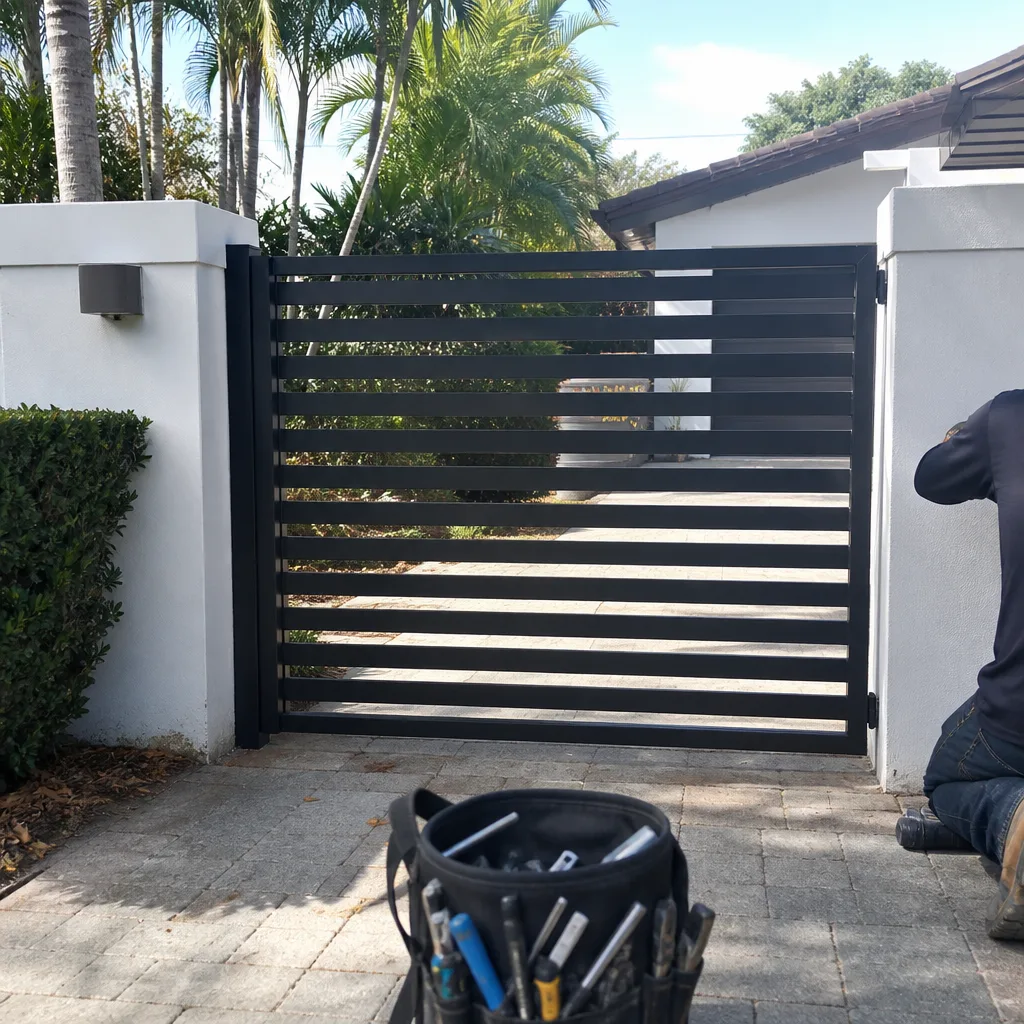
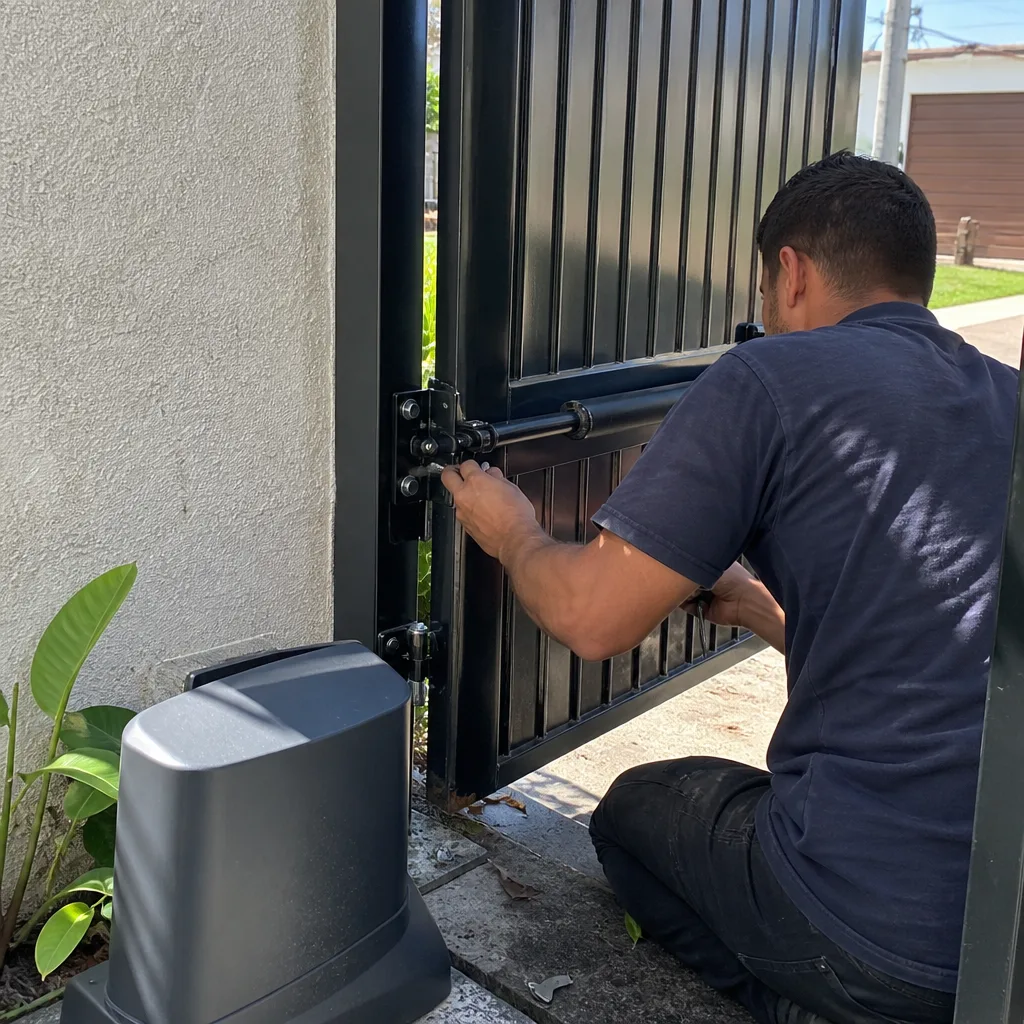
See the difference
 Before
 After
After Before
 After
After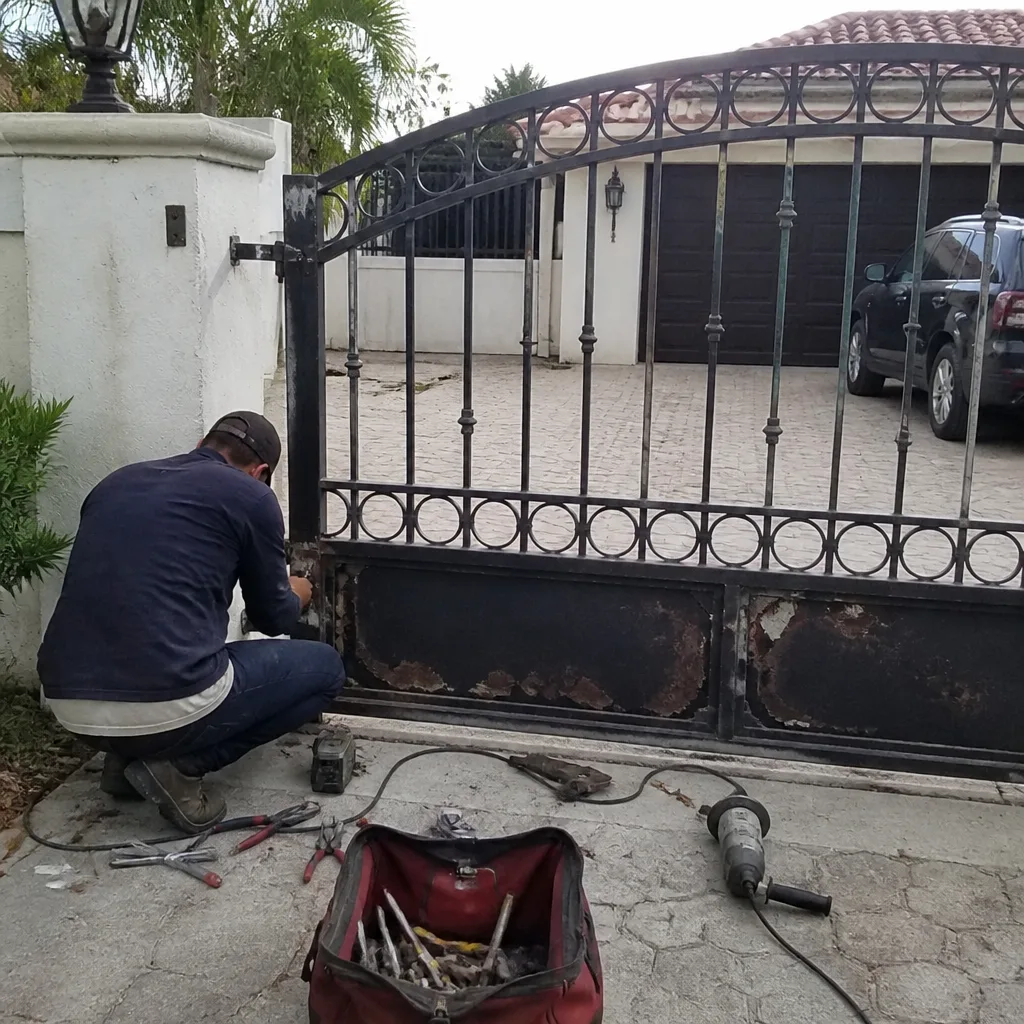 Before
 After
AfterWhen to Call a Professional
Call a professional when any of these apply: the gate makes a sound it didn’t make last month, the hesitation lasts more than one second, the gate sags visibly, the remote range has shrunk by more than half, the safety edges don’t respond when pressed, or the gate reverses unpredictably without an obstruction. Outside of cleaning photo-eye lenses – which is safe and simple – there’s no gate repair on this page that a homeowner should attempt. Gate operators contain high-tension springs, heavy mechanical assemblies, and live electrical components. A swing gate counterweight under tension can release without warning; a slide gate that jumps its track can pin a person against a wall. The 365-Day Done Right Promise covers the work we do, and the written price before any work starts means you’ll never find out the cost after the fact. Gate Repair in Fort Lauderdale is what we do every day, and Portcullis Gate Repair Fort Lauderdale home is where all our service commitments are documented. Call Portcullis Gate Repair Fort Lauderdale at (754) 354-7351 for a free estimate – a real person will answer, any hour, any day.
Frequently Asked Questions
Grinding on a swing gate typically costs $150 – $250 if it’s hinge wear and $300 – $500 if it’s a slide gate drive gear. If the grinding has been present for more than two months, expect the repair to reach $700 – $1,400 because the worn component has usually damaged the adjacent hardware by that point. Call (754) 354-7351 for an exact quote – estimates are free, and the price is always in writing before work begins.
A capacitor replacement, photo-eye realignment, or relay swap can typically be done same day – we carry common parts for LiftMaster, FAAC, BFT, and Mighty Mule operators on every truck. A full motor or control board replacement may require a parts order if it’s a less common component, though most Fort Lauderdale residential operators we service are ready within 24 – 48 hours of diagnosis. We’ll give you a written arrival window, not a vague “sometime between now and Thursday.”
A sagging gate usually means the upper hinge has failed or the post has shifted, and in most cases it can be fixed without replacing the gate. The repair involves a new hinge set, possible weld reinforcement at the hinge plate, and a re-hang that restores the original clearance, running $350 – $700 on typical residential gates in Fort Lauderdale. If the sag has been present long enough to cause the operator to bind, the additional repairs push the total higher.
Range loss on a Fort Lauderdale gate is most often corrosion on the antenna connection or on the receiver board terminals inside the operator housing – a problem the salt air in this market makes much worse than inland. The repair is a terminal cleaning, antenna reseal or extension, and a sensitivity check, running $140 – $240. If one remote works at distance and another doesn’t, the problem is that remote, not the receiver.
Yes. A gate that reverses unpredictably or fails to respond to its safety edges is a safety hazard and should be disabled from automation until a technician examines it. The cause is usually a drifted force setting or a failed safety input, and the repair is $120 – $280 in most cases. But until it’s confirmed, treat the gate as capable of causing serious injury – cut power at the operator disconnect and pin the gate so it cannot move.
The 365-Day Done Right Promise is a written guarantee on every repair Portcullis Gate Repair Fort Lauderdale performs: if the repair fails within 365 days, we come back and correct it at no charge. It’s stamped on the invoice, it covers parts and labor on the repair we did, and it includes a free second visit. No fine print, no pro-rated adjustments, no argument about whose fault it was. The Kingswell Guarantee applies the same standard everywhere: written price before work, real arrival window, clean job site, and written guarantee on the repair. To schedule a repair that’s covered by it, call (754) 354-7351.
The Bottom Line
Fort Lauderdale gates fail in predictable ways, and nearly every major repair we see started as a minor symptom someone lived with for too long. A two-second hesitation is a $90 capacitor, not a sensor glitch. A grinding swing gate is a $150 hinge service, not a personality quirk. Coastal Fort Lauderdale’s salt air accelerates every failure pattern on this page, which means the annual inspection here is not optional maintenance – it’s the cheapest insurance against the $1,800 – $3,000 gate replacement nobody budgeted for. Run the 10-cycle diagnostic once a month, act on the first sign, and when the symptom is on the safety list, cut power and call. For more guides & resources, visit our blog. Portcullis Gate Repair Fort Lauderdale answers live, 24/7, at (754) 354-7351. The price is written before the work starts, and the 365-Day Done Right Promise is written on the invoice. That’s how we’ve done it since 2008, and that’s the standard Dean Prescott holds for every gate we touch in Fort Lauderdale.
Written by Dean Prescott, Owner at Portcullis Gate Repair Fort Lauderdale, serving Fort Lauderdale since 2008.